




Tick Life Cycle
The Life Cycle of the Tick
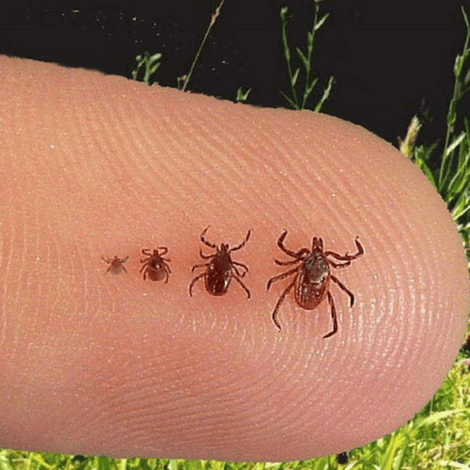
Ticks are tiny arachnids, and just like their spider relatives, have 8 legs. Unlike adult spiders, ticks are ectoparasites, which means they stay alive by feeding on the blood of mammals.
Ticks cannot jump or fly; instead, they climb vegetation and wait for a host to come into contact with them, when they attach themselves and begin feeding.
Typically, ticks live in wooded or grassy areas, like forested properties, provincial and national parks, and the woods. Ticks are most active in Spring and Fall but will begin biting as soon as temperatures are consistently above 7 degrees.
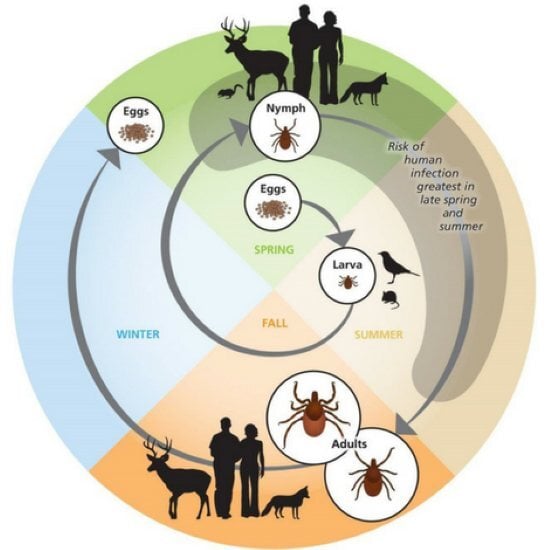
Ticks have 4 life stages; Egg, Larvae, Nymph, and Adult. The entire tick life cycle can last up to 3 years.
Tick Lifecycle Stages
1. Egg Stage
2. Larvae Stage
3. Nymph Stage
4. Adult Stage
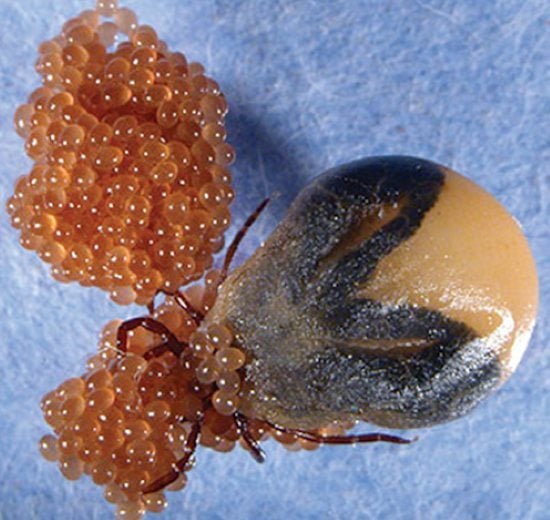
Egg Stage
- Ticks feed on 3 hosts during their development
- Mated females lay thousands of eggs on the ground. The eggs hatch into larvae or "seed ticks" which only have 6 legs.
- Female adults die after egg-laying is complete
Larvae Stage
- Eggs hatch into larvae know as "seed ticks"
- Larval stage ticks only have 6 legs
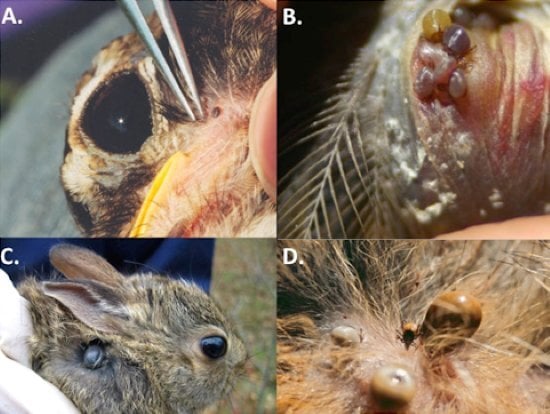
- These larvae remain close to the emergence site and climb up on grass and low vegetation so they may attach themselves to small animals which pass by (Mouse, squirrel, rabbit, bird)
- After feeding for 2 to 9 days on their hosts, the larvae drop to the ground, digest the blood and then molt to the 8-legged nymphal stage.
Nymph Stage
- Nymphs attach themselves to a second host
- Obtain a blood meal on small mammals
- After feeding on these hosts, the nymphs molt to the 8-legged adult stage
Adult Stage
- After an adult female attaches itself to a host, it often takes up to a week to complete its feeding
- Once the female has become engorged, it drops to the ground and mates
- Mating can also take place on the host before or during feeding
- Adult males die after completing fertilization
- The female ticks die after laying their eggs
TICK CONTROL FOR YOUR BACKYARD